Diamond Stones for Treasure Hunters!

Some of our Treasure Hunters Diamond hunters will find one of many diamond stones as their treasure. These diamond stones are naturally occurring precious stones that hold a unique essence of their own, making them truly valuable. Browse all the dazzling gold stone treasures you can find below, and let the hunting begin!

About Treasure Hunters Diamond

Lapis Lazuli

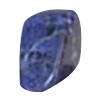
Lapis Lazuli is a rock composed of the minerals lazurite, sodalite, calcite, and hauyne.  It is mined in small amounts in just a few countries.  Some areas in Afghanistan have produced Lapis Lazuli for over 6,000 years. The bright blue color of Lapis Lazuli has made it one of the most popular semi-precious stones of all time. The name of this gemstone comes from two Latin words: “lapis” is the Latin word for “stone,” and “lazuli” is derived from the Latin word for “blue.” The world’s blue stone!

Sodalite

Though it sounds like a name for a reduced-calorie soda, Sodalite is a rare rock-forming mineral, named for its sodium content and best known for its amazing blue to blue-violet color. Some rocks with a high sodium content can be polished to a shine and making them extremely sought after. Sodalite is valued as a gem, ornamental stone, and as building material.

Green Fluorite

Fluorite is a mineral composed of calcium and fluorine. It occurs in a variety of beautiful colors that inspire people to use it as a gemstone or in making ornamental objects. Fluorite ranges from clear to yellow to green to blue to purple in saturations that are so light that the stones are as transparent as crystal to so dark that the stones are barely translucent. People are delighted by this range of colors and that is part of what makes fluorite a desirable gemstone material. Some stones are a solid color, while others are banded with two or more colors present in a single stone.

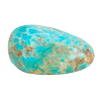
Turquoise

Turquoise is an opaque, blue-to-green mineral. It is a hydrated phosphate of copper and aluminum that is extensively used as a gemstone. The richness of color is the chief determinant of the value of a turquoise sample. Generally, the most desirable color is a strong sky blue to “robin’s egg”. Despite being one of the oldest gems, probably first introduced to Europe through Turkey, turquoise did not become important as an ornamental stone in the West until the 14th century. Today, Turquoise is mined chiefly in Iran, Afghanistan, China, Australia, Chile, Mexico, and in the US states of Arizona and Nevada.  We use stones of the highest quality primarily from the US and South America.

Amethyst

Amethyst is crystalline quartz in colors ranging from pale lilac to deep reddish purple. The February birthstone can make a fine jewelry gem and lower grades of material can be made into a great variety of beads and other ornamental objects. In fact, it is the one of most popular gemstones of all time! But if you don’t like purple, you’re in luck…Amethyst can be heated and will turn it greenish yellow!

Banded Amethyst

Amethyst is the world’s most popular purple gemstone and has been used for thousands of years. This amethyst is tumbled from crystals that grew with zones of white quartz alternating with purple amethyst. That is the cause of the banded pattern.  This is truly a  beautiful gemstone!

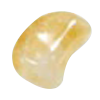
Citrine Quartz

Citrine is crystalline quartz from yellow to red-orange. Citrine is the thirteenth annual gem. The name citrine is derived from the Latin word ‘citrina’ meaning lemon. Identifying a true citrine is not easy. But it is relatively easy to find out if the so-called citrine is a modified amethyst. If the color is deep and dark orange-yellow, then look for more sources to find citrine. Original citrine is usually a soft yellow color, which is relatively rare. Citrine has been a popular decorative gemstone since ancient times.

Chocolate Calcite

Chocolate Calcite is a beautiful stone that has a combination of banded dark brown and pale nougat-colored pale brown bands, sometimes referred to as Brown Aragonite. The mineral calcite is well known for its spectacular and varied crystal formations of which there are more than 300 different types. Calcite has more crystal structures than any other mineral.  It is also one of the most common minerals on Earth, calcite forms many rock types including limestone, marble, and travertine.  It can also be found in caves as stalagmites and stalactites and is the main component in the shells of sea creatures.  Calcite is so widespread it can be found in almost every country in the world.  This is a rare find so enjoy!

Seafoam Calcite

The mineral calcite is well known for its spectacular and varied crystal formations.  In fact, there are more than 300 different types.  Calcite has more crystal structures than any other mineral.  It’s often massive which means crystals are tightly intergrown and form one large mass. Individual crystals are not visible and have no external shape or structure.  Calcite crystals can vary dramatically in size and shape.  They can be found in almost any color.   In its purest form calcite is either colorless, very pale, or white though shades of gray, red, orange, yellow, green, blue, violet, brown, or even black can occur when the mineral is charged with impurities.  We hope you love our Seafoam Calcite stones as much as we do!

Clear Quartz

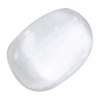
Clear Quartz is the most recognized type of crystal, and this is because it is what most people think about when the word “crystal” comes to mind. This crystal is known to be colorless, translucent, or transparent. The name Quartz is derived from the Greek word “krystallos” which translates to ice. In fact, during ancient times, it was believed that Clear Quartz was ice that was formed by Gods. Clear Quartz begins to form when within an igneous rock when the magma begins to cool. This happens because as it cools down, the silicon dioxide will begin to crystallize which will allow the crystals to grow larger in size. Once the pressure or temperature drops the solution used in time becomes saturated and that is when the Quart crystals will begin to truly form.

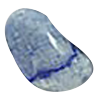
Blue Quartz

Blue quartzite is a blue metamorphic rock that receives its color from tiny inclusions. These inclusions are blue prismatic crystals, which are probably dumortierite. The appearance of blue quartzite varies from stone to stone. Some stones have a uniform blue color, some have an irregular distribution of blue color, and some have bands of a strong blue color. The color is determined by the presence and abundance of the blue mineral inclusions. Some people might call this material “dumortierite quartzite.”

Rose Quartz

Rose Quartz is widely known as an alternate birthstone for the month of January. Rose Quartz’s pink shade can range from an incredibly vibrant and opaque to a soft almost translucent shade of pink. Rose Quartz can be found in a variety of locations scattered around the world. They can be found in India, Germany, Madagascar, Brazil, and the United States. The state of South Dakota located used to be known for producing a significant amount of Rose Quartz but today the world’s leading supplier of Rose Quartz derives from the mines of Brazil.

Selenite

Selenite is one of the prettiest and most elegant crystals. The most common Selenite is white and translucent. The name ‘Selenite’ derives from the Greek goddess Selene, the goddess of the moon.  Selenite is usually tubular in shape, with different patterns and striations. Selenite has been found in many locations, including Mexico, Russia, Morocco, Greece, Poland, Germany, France, England, Australia, and the USA.  Selenite is soft and can absorb dyes easily.  BUT they can be cleaned up with the use of household detergents!

Boost | Bejeweled Wiki | Fandom

MYSTERY STONES

Occasionally you will encounter some unique and surprise gemstones that aren’t listed…do not worry, this is intentional!  These can include varieties of Quartz, Jade, Amazonite, Lepidolite, Sunstone, Carnelian and others!  We encourage you to hunt for additional information on these treasure gemstones!  ENJOY!